Showing posts with label Design Agendas. Show all posts

Saturday, 22 November 2014

Simple, Passive Utility

My design agenda.  Let me explain further...

Simple

In physics and maths, the best theories have the simplest equations.  Newton's Second Law, F=m.a, which is covered by Einstien's Theory of Special Relativity, E=mc2, define the properties of the universe from planetary motion to micro scale motion, and the reason they are heralded as the most important two equations in maths and physics is because of their simplicity. Infact, Einstein is quoted as saying "everything should be made as simple as possible, but not simpler."

My definition of simple isn't bound just to aesthetics (actually, I think that modernism has the potential to have dystopian overtones if you were to surround yourself with it), but with mechanisms and the way we interact with objects - they should be intuitive and not overcomplicated.

It also relates to sustainability.  The fewer parts a product has, the easier it can be maintained or dismantled should it be thrown away.

Passive

This goes back to a particular object in my life.  My mum has a wooden spoon that I have made her promise never to throw away (ditto a kitchen table).  Though completely unremarkable in appearance - it's literally a basic wooden spoon - in it's own way it represents my childhood memories. The fact that it is made of wood also has resonance with me, as I think wood is one of the best materials for absorbing history; it scratches, scuffs and stains easily, telling tales of it's life much like the scars and marks on our own skin.

In my mind, passivity of a design allows a user to have a real relationship with that design through their interaction with it and allows them to project their own meaning on it. I'm not interested in creating superficial relationships with objects, cherished just because they were designed by a celebrity designer and can be used for confirming social status.  My aim is to produce humble designs that people can connect with in their own way and don't add to the noise of our everyday lives.

Utility

Being a mechanical engineer, I have a real love for products that do something mechanical.  I'm not fond of dummy objects whose only value comes through their wifi connectivity (Nike's FitBit for example).  I prefer objects that can be used as tools that a person has to interact with on a physical, tactile level.

Utility for me means that a product should have a job to do, and it should do it well and be uncomplicated to use.  This also relates to my simple agenda, but also on inclusive design as I believe that all people should be able to use the same products.

A design that echos my personal design agenda would be a corkscrew.  It's a simple design that does its job well and doesn't require extra styling (though I know Alessi have managed to produce a stylised one).  It is an object that you wouldn't ordinarily have a connection with on a personal level and is produced cheaply but it avoids throwaway culture.  You wouldn't throw it away unless it was broken, you don't feel the desire to buy them in lots of different colours and not many differ from the core designs. It's a simple utility product that has a passive aesthetic.
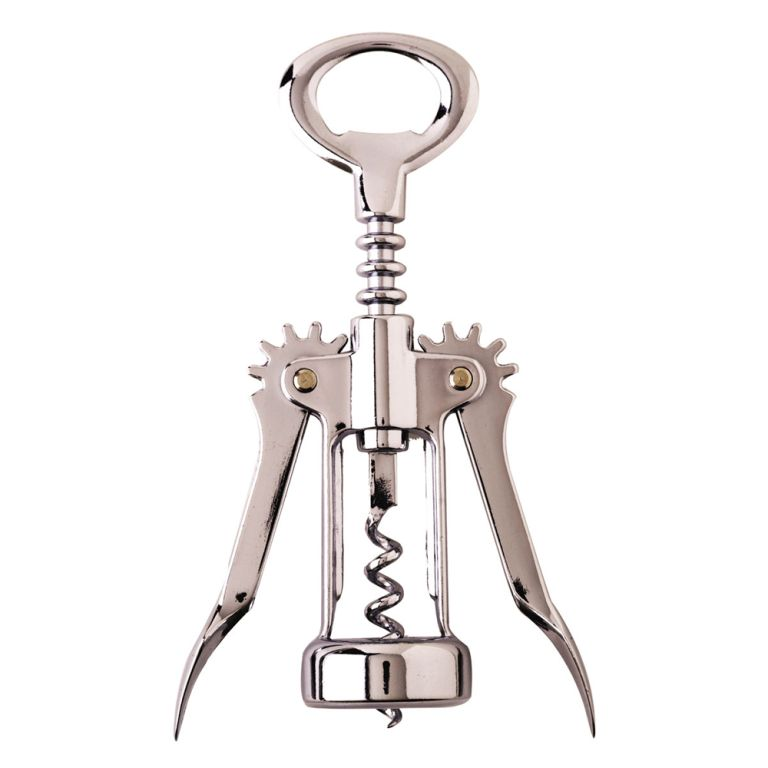
Source


Now if only I can come up with something like that!

-----------------------------------------------------------
Books I've been reading:
Design in context - Penny Sparke
Twentieth Century Design - Jonathan M. Woodham
As long as it's pink - Penny Sparke

Overview of Processes

Things I have learnt this month:
1) A month goes really fast
2) Thinking is hard
3) Thinking is best done in a specific environment (it turns out that I don't think well at home!)

Apologies to my coursemates who have had to hear me verbalise my various internal conflicts over and over again.  For those of you who missed it, here is my visual summary...

Design Agendas

My Design Agendas work started off by looking at Ettore Sottsass who, as it turns out, was a very confusing character and quite difficult to define.  He began his career as an architect, studying in Vienna, with a focus on modernism but ended up becoming a figurehead of the anti-design port-modernist movement.  Sottsass himself disliked being pigeonholed into a style (despite being a founding member of Memphis, which seemed to be the pinnacle of post-modern design), and often talked about his fondness for modernism and how post-modernism wasn't always a send-up of the turn-of-the-century utilitarian design, but how it was more of a reaction to the rules set out by governmental design boards on "good design".

Ok, so I still don't like the work he produced, but at least now I can appreciate where he was coming from.  His sentiments also echo my own; though I love the sleek, functional aesthetic of modernism, I think it would feel oppressive to live with only those objects, their bleak and spare designs devoid of joy and personality.  The designs produced after the post-modernism movement gave us a much more playful aesthetic, allowing designers to be flippant and have fun with their designs without them having to have some deep and meaningful core message.  Yes, this gave us the mass-produced plastic dross that we throw away by the tonne but it also gives us pieces to enjoy just because we like them - Alessi's plastic range - without anyone trying to tell us that it isn't "good design".

So then I spent a lot of time thinking about the celerity culture around design.  Being a sentimental type, I think back on William Morris's ethos that everyone should be able to afford stylish items (of course in practice, his hand-crafted items ended up being well out of the reach of the layman).  My mind then goes to the "big name" designers; Ron Arad, Zaha Hadid, Jonathan Ives, Philippe Stark etc. I have to say that regardless of whether I like specific designs or not, the overwhelming factor for me is the vulgarity of the celebrity designer.  That's not to say that I'm pro anonimity in design, but it bothers me that many people think that these designers have the Midas touch.  Out of this internal rant, I came to the conclusion that one of my design agendas should be to keep my designs humble.

Advanced Digital Design

At the same time as all this internal dialogue is going on, I had to think of a product to design and prototype for my digital design module... Not surprisingly, this took a very long time to do.  Looking back on it,I can see a direct path between my thoughts but when you're in the midst of it, it's a lot less clear.

It started on an internal debate about whether I could create a deliberately obnoxious design - I was thinking of a speaker that would shout out tweets or facebook status' out loud to make people realise the things they say on the internet.  Oh and it should have the voice of John Cooper Clarke.  Quickly my brilliant idea became less brilliant as I realised that I don't have it in me to produce a design for something so obtuse and keep it going for a few months until the delivery date.   I just couldn't get fired up by anything.

During this time, we also had to come up with 5 key words that would help us focus our design intentions.  Again, I think this probably says more about my own state-of-mind at the time than anything else and were widely misinterpreted, so were probably too tenuous.  My words were: Gender Neutral, Dystopian, Joyful, Reclaimed and Natural.

Progression

About this time in both the projects I really started to have some personal motivational problems, surrounded by the confusion in my own thoughts and the stress from knowing that I had to come up with something.  I consoled myself with the saying "if it was easy, it wouldn't be worth doing".  My own personal crisis led me to look at the topic of wellbeing.  I once heard that 80% of students at university suffer from a mental illness during their university life, so even if I designed something that I could use to reduce my anxieties, maybe it would be useful for others too?

This led me to a quote from Confucius, "Life is simple, but we insist on making it more complicated".

After a rather chaotic meeting where I emptied my mind onto the table in front of my bewildered coursemates, my tutor managed to sift through my knotted thoughts to define what he thought could be my design intentions.  A week of thinking further about them in preparation for a presentation allowed me to solidify my own processes and this is what I have come to...

Simple, passive utility.

-----------------------------------------------------------
Books I've been reading:
Cradle to cradle : remaking the way we make things - William McDonough
Thinking: Objects - Tim Parsons
Ettore Sottsass: architect and designer - Ronald T. Labaco
Just kidding!: A to Z designs for kids & kidults -  Viction
Printing things: visions and essentials for 3D printing - Claire Warnier, Dries Verbruggen

Friday, 24 October 2014

What is interesting? Conflict vs Comfort

Part of my research for the Design Agendas project.

We've been set a new project to work on, looking into Design Agendas.  I think its to start us off considering what our own design agendas are prior to starting our own major individual projects, and trying to work out what we want our products to say to the world and what message we are trying to get across.

The aim of the project is to do some research into a handful of designers or groups that fit into a design topic that we find interesting.  The topics were given to us to narrow our field of research somewhat but allow us to consider things from different angles that we maybe hadn't considered before...


Materiality in Production Future Digital Production & Generative Design Inclusive design Hi-tech Design & Gadgets
Sustainability through Longevity Reduce, Reuse, Recycle & Up-cycle Global/Local Super Normal
Inspired by Nature & Bio-mimicry Function & Interaction A Return to Tradition Environmental & Ecological Impact
Digital Craft Personal, Social & Historical Narratives Customisation & Intervention Critical Design

Looking at this table it is clear that many of the topics are heavily intertwined and immediatley spotted some that resonate what I consider to be my own design agenda - that of sustainability, simplicity through form to provide function and things that echo our relationship with the natural world [highlighted green above].

We were also provided with a list of designers as a starting block to help us delve into the world of design.

Beginning my research, I looked mainly at the work of the designers on the list [partially because you can't really google "environmental and ecological impact" and get actual results], and what I noticed was that I was having very strong reactions to some of the designers and their styles.  I see myself as a bit of a cynic and this is probably re-enforced by my background in engineering, so I have had difficulty in seeing the hidden meaning behind why things are designed as they are.  The social commentary that is built into art(and form)-led design has often alluded me, and I tend to be drawn to things that lack this philosophical design reasoning and look like they do because of their function.

Then I had a mini-epiphany and decided "Why not make life more challenging and research the things that annoy me?".  Our tutor David talks a lot about conflict and I think that this would be an opportunity to really wrestle with some internal conflict and try to work out why certain designs and designers get on my nerves; what is it that I don't like and why? 

Ettore Sottsass - Carlton Room Divider (Source) : One of the Anti-Design Movement

It's all about conflict vs. comfort; in the topics I'm comfortable in, I will just be confirming that I like what I like - well done, you found someone else who agrees with you, have a pat on the back for having such good taste. In the topics that would naturally conflict with me, I can discover what it is that I don't like, what attitudes and commentaries are opposed to my opinion and why they do what they do.  Who knows, maybe my opinions will change a bit?